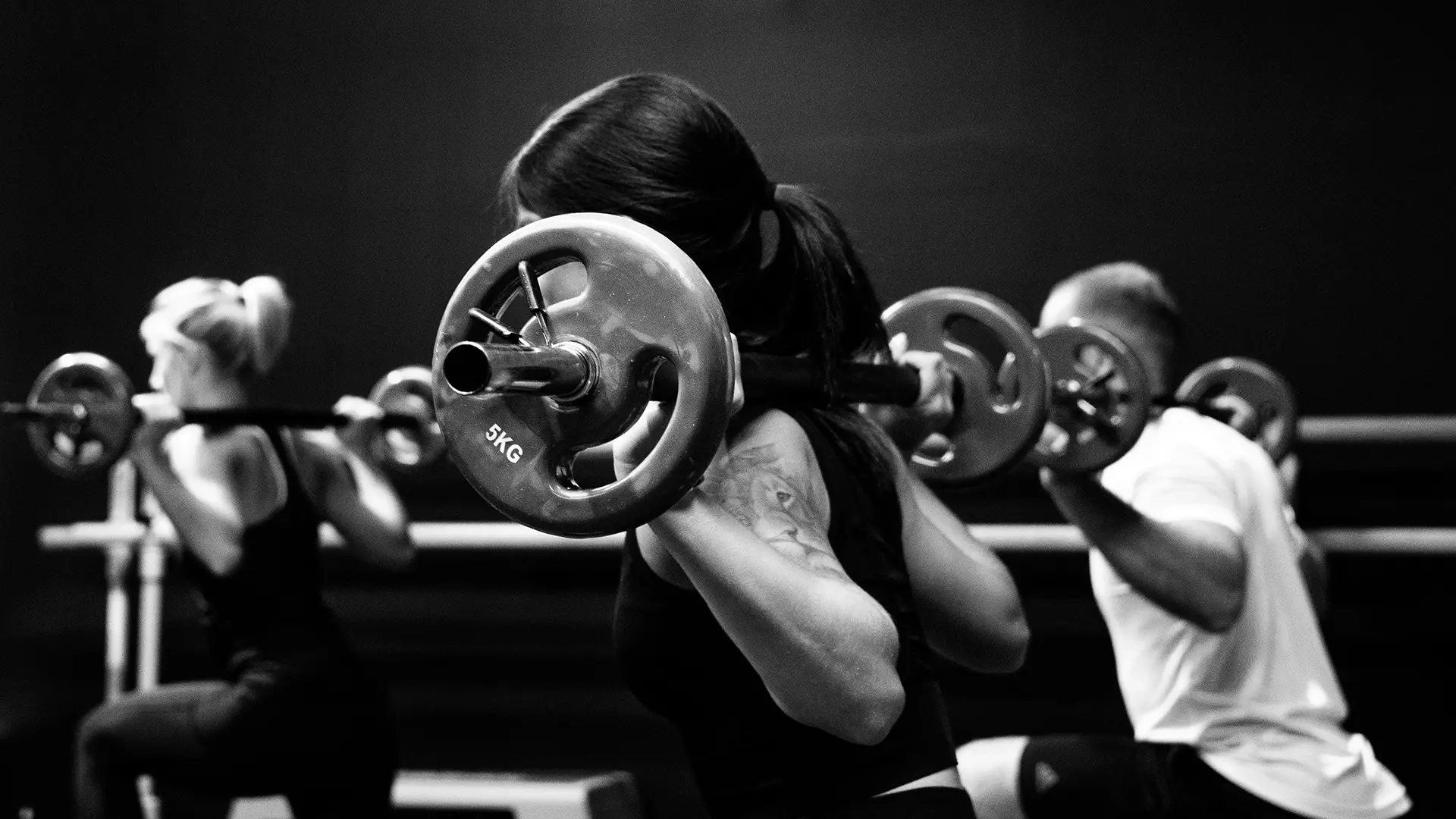
Avoid these 9 beginner gym mistakes, from lifting too heavy to skipping recovery. Learn how to train smarter, improve your technique, and build confidence.
Your first few trips to the gym can feel like walking into a room where everyone knows the rules except you.
Someone is lifting weights that look like furniture. Someone else seems to have a complicated relationship with three different machines. And you’re standing there, wondering whether you’re using the treadmill correctly or accidentally occupying somebody’s sacred bench.
Here’s the good news: you don’t need to know everything to get started. You need to learn a few fundamentals, respect your limits, and stop making the same avoidable mistakes.
The most common beginner gym mistakes aren’t necessarily dramatic. They’re the small habits that make training harder than it needs to be: lifting too heavy too soon, copying someone else’s workout, rushing through exercises, and expecting results before you’ve built a consistent routine.
If you’re new to the gym, these are nine things worth changing before your next session.
1. Lifting Too Heavy, Too Soon
It’s tempting to judge progress by the number on a dumbbell. Heavier weights look impressive, and nobody wants to feel like the least experienced person in the room.
But lifting more weight than you can control often leads to shortened movements, awkward compensations, and technique that falls apart before the set is finished.
Your goal isn’t to convince the gym that you’re strong. It’s to develop strength.
What to do instead:
- Start with a manageable weight that lets you perform the exercise with controlled technique.
- Learn the movement before increasing the resistance.
- Finish your set feeling challenged without having to sacrifice control to complete another repetition.
- Increase the weight gradually when you can consistently perform the exercise well.
For example, if you’re learning dumbbell shoulder presses, begin with a weight you can lift without arching your back excessively or struggling to control the descent.
There is no prize for rushing the learning process. Build the foundation first; the heavier weights can come later.
2. Skipping the Warm-Up
Arriving at the gym and immediately loading a barbell can seem like an efficient way to get started. Unfortunately, saving a few minutes isn’t particularly useful if you’re beginning your session feeling stiff and unprepared.
A warm-up gives you an opportunity to raise your activity level gradually and rehearse movements similar to those in your workout.
What to do instead:
Spend several minutes warming up with an easy activity, such as walking or cycling, followed by dynamic movements suited to the session. Before a demanding strength exercise, begin with lighter practice sets of that movement.
For example, before a lower-body strength session, you might walk briskly, perform some comfortable bodyweight squats, and then complete lighter sets of your first loaded exercise.
Your warm-up should prepare you for the workout without exhausting you before it begins.
And remember: a warm-up is not a guarantee against injury. It’s one sensible part of preparing to exercise.
3. Copying Someone Else’s Workout Without Understanding It
You see someone performing an elaborate routine and decide it must be the secret to their results. Suddenly, your beginner workout includes six exercises you’ve never tried, a complicated sequence of supersets, and a finish that leaves you questioning your life choices.
The problem? You don’t know whether that routine suits your experience, goals, available time, or recovery needs.
A workout that works well for an experienced lifter isn’t automatically appropriate for a beginner.
What to do instead:
Choose a straightforward programme based on your primary goal.
If you’re building general strength, a manageable full-body routine covering major movement patterns can be a useful starting point. If endurance is your priority, incorporate appropriate aerobic activity. If you have a specific athletic goal, your programme can become more specialized as your skills develop.
Before adding an exercise, ask three questions:
- What is this exercise helping me achieve?
- Can I perform it with appropriate technique?
- Does it fit into my overall programme?
You don’t need the most complicated workout in the building. You need one you understand well enough to perform consistently and progress sensibly.
4. Rushing Through Repetitions
More repetitions in less time can make a workout feel productive. But speed becomes a problem when you’re bouncing through movements, losing control of the weight, or using momentum to finish every repetition.
During strength training, control matters. You should understand the movement, maintain a stable position, and use a range of motion appropriate to your ability and the exercise.
What to do instead:
Perform repetitions at a controlled, repeatable pace. Pay attention to both the lifting and lowering portions of the movement, and avoid using momentum to compensate when the weight becomes difficult to manage.
Take a dumbbell row as an example. Rather than jerking your torso to pull the weight upward, focus on a stable position and a controlled pull.
This doesn’t mean every exercise must be performed painfully slowly. The right tempo depends on the movement and training objective. For beginners, however, learning to control each repetition is a useful priority.
If your technique changes dramatically as soon as you start moving faster, reduce the weight or adjust the exercise.
5. Treating Every Workout Like a Competition
There is a difference between training with effort and trying to destroy yourself every time you enter the gym.
Beginners sometimes assume that if a workout doesn’t leave them exhausted, drenched in sweat, or sore the following day, it wasn’t effective.
That isn’t a reliable way to judge a session.
Sweating depends on factors such as temperature, clothing, and individual physiology. Muscle soreness can occur after unfamiliar exercise, but soreness alone doesn’t tell you how effective a workout was.
What to do instead:
Focus on completing the planned work with appropriate technique and effort.
You should generally finish a beginner session feeling that you’ve challenged yourself without being so depleted that your next workout becomes unnecessarily difficult.
Increase training demands gradually as you adapt. Some sessions will feel easier than others, and that is normal.
Your fitness routine is a long-term process, not a series of daily auditions for the role of World’s Most Exhausted Person.
6. Ignoring Rest and Recovery
More training is not automatically better training.
If you exercise intensely every day without allowing adequate recovery, you may find it increasingly difficult to maintain performance, motivation, and consistency.
Recovery requirements vary depending on your training, experience, sleep, nutrition, health, and other demands on your body.
What to do instead:
- Schedule rest or lighter activity when appropriate.
- Allow time between demanding sessions that work the same muscle groups.
- Get adequate sleep and eat enough to support your activity.
- Increase the amount and intensity of training gradually.
- Pay attention to persistent fatigue or pain rather than trying to push through everything.
Rest days don’t mean you’re falling behind. They’re part of a programme designed to be sustainable.
Also, distinguish ordinary exercise effort from warning signs. Stop exercising if you experience concerning symptoms, and seek appropriate medical advice when necessary.
7. Neglecting Technique Because You’re Focused on the Mirror
Checking your appearance is understandable. You’re working toward a goal, and it can be satisfying to see changes over time.
But if every gym session revolves around looking bigger, leaner, or more defined immediately, you can lose sight of the skills that help you train effectively.
A mirror can help you observe your position during some exercises, but it cannot replace understanding proper technique.
What to do instead:
Learn the movement before worrying about how it looks.
For unfamiliar exercises, ask a qualified trainer to demonstrate the movement and check your technique. If your gym permits it, a short video of your form can also help you review your movement, provided you follow the facility’s privacy rules.
Pay attention to stability, controlled movement, and the position of your body throughout the exercise. Use a range of motion you can manage comfortably and safely.
And measure progress in more than one way. Improvements in strength, exercise control, endurance, and consistency can all be meaningful, even when visible physical changes take longer.
The mirror is a tool. It doesn’t need to become your personal training manager.
8. Spending More Time on Your Phone Than Your Workout
A quick glance at your phone between sets is harmless for many people. The trouble begins when every rest period becomes a social media session and a planned 45-minute workout stretches into an afternoon.
Longer rests can be appropriate for demanding strength exercises, so don’t feel pressured to rush every break. The issue is whether your phone use distracts you from the programme or makes it difficult to return to the next set.
What to do instead:
- Write down your exercises before arriving.
- Use your phone for your workout notes or a timer if helpful.
- Decide roughly how much rest each exercise requires.
- Keep notifications from interrupting your session where possible.
- Return to the next set when you’re sufficiently recovered and ready to perform it well.
If music helps you focus, create your playlist before the workout begins.
Your phone can be a useful training tool. Just make sure you’re the one using it, rather than the other way around.
9. Expecting Results Without Giving the Process Time
Perhaps the most frustrating beginner gym mistake is expecting dramatic results almost immediately.
You train for a week, inspect your reflection, and wonder why you don’t look noticeably different. You try a new exercise programme, see little change after a few sessions, and decide the programme must be ineffective.
Meaningful fitness adaptations take time, and the pace of progress differs between individuals.
Your starting point, training consistency, programme design, recovery, nutrition, and other personal factors can all influence your results.
What to do instead:
Give your programme enough time to establish a pattern, and track progress using measures that match your goals.
For strength training, record the exercises, resistance, repetitions, and how well you perform them. For endurance, track the duration or distance of your activity. For consistency, count completed sessions.
Review your progress periodically instead of judging the entire programme after every workout.
If you’re consistently training but not progressing, consider whether your programme needs adjustment. A qualified trainer can help you identify opportunities to improve.
Most importantly, don’t compare your first month with someone else’s fifth year.
You are not behind. You’re at the beginning of your own process.
A Quick Checklist Before Your Next Gym Session
Before you start, run through these five questions:
- Plan: Do I know which exercises I’m doing and why?
- Preparation: Have I warmed up appropriately?
- Technique: Can I control the movements I’m about to perform?
- Effort: Am I challenging myself without treating every set as a maximum-effort test?
- Recovery: Have I allowed enough time to recover from previous training?
You don’t need a perfect answer to every question. The point is to approach your workout with intention rather than improvising everything once you arrive.
The Bottom Line
Being a beginner doesn’t mean you’re doing everything wrong. It means you’re learning.
The smartest approach is to build good habits early: choose an appropriate programme, learn proper technique, increase the challenge gradually, respect recovery, and measure progress over time.
You don’t need to impress the person lifting twice your weight. You don’t need to finish every session exhausted. And you don’t need to know every machine in the gym before you belong there.
You just need to keep learning and show up ready to improve.
Before your next workout, choose one mistake from this list to correct. Focus on that change, build confidence, and explore more from Privé Anthony for inspiration on training, sportswear, and active living.